A few low-cost 3D scanners have come out recently – ReconstructMe, Matterport and 3Dfy. These start-ups have utilized the Kinect or a Kinect-like device to make an affordable solution for modelling actual spaces and products. I was ecstatic when Microsoft released the Kinect and then the development software. It’s such a powerful hardware/software combo. It made sense that cheap, 3D scanning was just around the corner. I’m happy to see many amazing third-party applications and innovations now using this platform. Here’s a breakdown of some of the latest scanning technology changing how we capture our world.
You’ll likely opt not to eat off of this table, but if you do, the site of precision gears while you’re chowing down on a flank steak and side of greens may be good for the digestion. The elegantly mechanized ASTROLAB Dining Table from the Design Studion of Roche Bobois is a site to behold and a perfect combination of design and engineering.
Slap on your backpack and file this under survival gear of the week. The PowerPot is a thermoelectric power generator you can use after escaping a post-apocalyptic air-raid to supply power to small electrical devices like your phone, a light or a USB microphone you use to broadcast weekly survival tips.

The universal challenges faced by Trek in creating a new generation racing bike apply to many companies today: Create products that are sturdy yet use lightweight materials, spot design defects earlier in the design phase and reduce time from sketch to physical prototype.
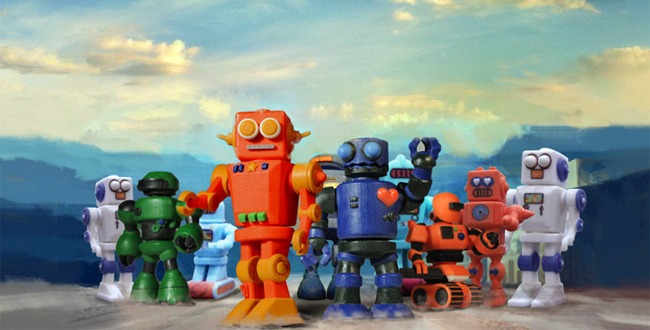
Less than six months ago, My Robot Nation launched. Tuesday, April 10th, 3D Systems announces they have acquired them. My Robot Nation is the fabulous 3D customize and print Robot Factory – a web-based platform that allows you to choose and customize your very own robot collectible. Or in my case, allows you to go to the site and let your children choose and customize their very own robot collectible.