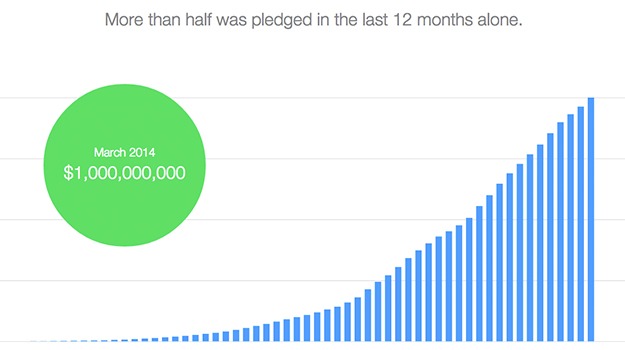
It seems like people in the product design community didn’t really take notice of Kickstarter until Scott Wilson and his group of talented designers at MNML raised nearly $1 million for their TikTok+LunaTik Multi-Touch Watch Kits. The kits—which were essentially a bezel and wristband to convert an iPod Nano into a digital wristwatch—ushered in a…
Premiering next week at SXSW in Austin, Print the Legend is set to be the first non-YouTube documentary that focuses on the rise of the 3D Printing community and the stories we’ve come to read almost weekly that go with it. Featuring in-depth footage of 3D printing newsmakers ranging from Bre Pettis to Cody Wilson and Avi Reichental, the film looks to be similar to Objectified, albeit with a focus on ‘The Next Industrial Revolution’. If you’re heading down to Austin next week for the SXSW conference, there will be three screenings starting Sunday 03/09 at the Stateside Theater. Take a sneak-peek at the trailer after the jump…
Among one of the most iconic costumes in the history of Hollywood, the Star Wars Imperial Stormtrooper costume has also been a significant inspiration for a variety of CMF directions. But how did the original and memorable design come to be? After being hired by George Lucas to help visualize the world of Star Wars back in 1975, concept designer Ralph McQuarrie took to his drawing and painting boards to create the very first Imperial Stormtrooper. In this product evolution from insane Star Wars memorabilia site StarWarsHelmets.com, we get a behind the scenes look of how one of film’s most memorable costumes went from a sketch to a final product.
If you’ve ever been to a sushi restaurant, chances are you’ve come in contact with the all-natural decorative and protective coating known as Urushi. Sourced from Urushi trees, this ‘natural wonder’ material was first used as an adhesive when making spears and arrows back in the stone age. Today, the liquid is applied to everything from wood and metal to cloth and ceramics. Once dry, the liquid becomes a hard and durable coating that waterproofs and protects objects from mold, mildew, and weathering. In this inspiring video from Japanese filmmaker Hirokazu Kishida, we get a look behind the scenes of the incredible amount of detail and patience that goes into the craft.
Where the soft calls of ocean mammals meet carefully extruded polycarbonate plastic, high-performing and beautiful surfboard fins are born. Boardshaper Roy Stuart has combined two things that will save the world: biomimicry and 3D printing.
Most surfers these days ride with three fin, or ‘thruster,’ setups. Thruster fins offer a good balance of performance and stability. Some use two fins, which is less stable and more maneuverable and typically used only in small water. Beginners, long boarders, and folks that like retro equipment use single fin setups. Offering much greater stability, single fins also limit performance significantly. To get a sense of the difference between thruster and single-fin performance, imagine a ‘70s surf video of riders smoothly flowing along a wave, and then contrast that with modern surfers shredding the heck out of it. That difference is due, in part, to the better performance of thruster fins.