While mirrorless cameras are getting more and more attention, DSLR units are still a good investment for beginners. They generally have better optical viewfinders and better battery performance. Most of all, DSLR cameras have better access to a wide selection of lenses. This means that as a beginner, you can explore more and more lenses as you grow your skills.
Not all DSLR cameras, nonetheless, can be favorable for beginners. The same thing goes for other types of cameras on the market. Besides their relatively large sizes, most modern cameras contain lots of complex settings and features that can sometimes be overwhelming for some users. This is why it is very important to check closely the important highlights of a camera.
Thankfully, there are few DSLR cameras that are specifically designed to be more beginner-friendly. One example is the famous Nikon D3500 which has ranked our past reviews many times now. It has this beautiful Guide Mode that is aimed to teach users of its important features in form of digital tutorials. It really is a big help.
More advanced features such as 4K videos and a tilting touchscreen screen are omitted in most cameras like the Nikon D3500. This possibly could be a big issue if you are a professional photographer, but such simplicity of design and set of features can mean a huge thing for a novice. Yet, it doesn’t mean that you should always settle for a cam with incredibly low specs.
The sensor and the megapixels of the camera are very important to check. If you want to enjoy the camera even after you master the basics of photography, getting relatively large sensors is suggested. Keep in mind that the bigger the sensor is, the better the quality of the shots could be.
The controls and buttons f the camera can also play an important part role in the ease of use of the DSLR cameras. The AF system is another point to check about DSLR cameras. As beginners, a reliable AF can be a huge aid in capturing high-quality detailed shots with ease. Some of the reliable brands that helpful features mentioned are Canon and Pentax.
To know more about them, check out the best DSLR cameras we reviewed. Together with our Photography Editor, Evangeline Summers, we give you unbias verdicts about our top picks after series of comparisons and tests. Here they are:
Best DSLR Cameras for Beginners Comparison & Rating
DSLR Cameras for Beginners | Features |
1. Nikon D3500 
| |

| |
| |
4. Nikon D5600 
| |
5. Pentax K-70 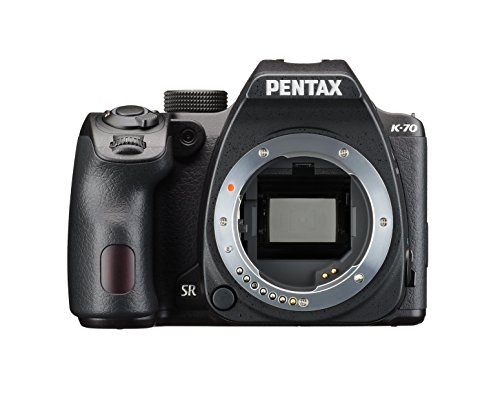
|
1. Nikon D3500
Sensor | APS-C CMOS |
Megapixels | 24.2 MP |
Lens Mount | Nikon DX |
Max Video Resolution | 1080p |


Nikon D3500 has always been one of our best picks in most of our reviews. If there is one reason behind this, it is its features that are tailored primarily for beginners - real beginners. This explains the reason why it lacks some modern details like a tilting touchscreen or 4K videos. This could earn the disapproval of some critics but, then again, D3500 is fashioned to be used by beginners.
Nonetheless, despite the absence of the said features, it won’t fail you with the basics that you need to get decent shots. This includes the 24.2 MP APS-C sensor which is very reliable to get crisp images with rich tones. The burst rate comes at 5 FPS which is fair enough given that it is a reasonably priced entry-level cam.
On the other hand, the biggest strength of the D3500 is its Guide Mode that is located on its dial. This gives users a better idea of how to use the entirety of the camera.
“It has this magnificent Guide Mode on the dial,” said Summers, “This feature is the reason we put this on the top of the list. Not only it will give you a virtual tutorial of the functions of the camera, but it will also allow you to adjust it depending on your need. With this, you have the option between the basic assistance or the tutorial for more advanced features of the camera.”
2. Canon EOS 250D / Rebel SL3
Sensor | APS-C CMOS |
Megapixels | 24.1 MP |
Lens Mount | Canon EF-S |
Max Video Resolution | 4K |


Canon EOS 250D, or Rebel SL3 in other places, is one of the best rivals of Nikon D3500. Besides being relatively smaller than other DSLR (which apparently is a huge help to improve its handling), it has other great features that are aimed towards new DSLR users such as the Guided UI, a viewfinder with distinctive autofocus points, and a Creative Assist mode.
Further, it has a vari-angle screen where you can use the Live View option of the camera. The good thing about this is that Canon’s Dual Pixel CMOS AF system is very efficient in recognizing, locking, and following the focus to the subject on the screen with just a single tap of your finger. It is very quick, effective, and easy to use.
According to Summers, its dynamic range is just right to get the right amount of details in dark and bright spots. It is really not something of a deal-breaker since it is comparatively almost the same as the performance of SL2 which is its predecessor. However, it has a great improvement in the noise control and level even at the highest ISO settings.
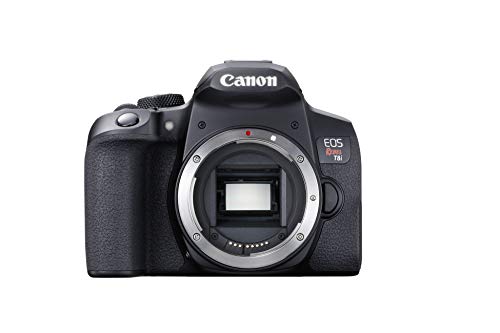
3. Canon EOS 850D / EOS Rebel T8i
Sensor | APS-C CMOS |
Megapixels | 24.1 MP |
Lens Mount | Canon EF-S |
Max Video Resolution | 4K |


The Canon EOS 850D is another camera that offers great guidance for new DSLR users. It comes with some helpful features such as the Scene modes. It is not really a deal-breaker since it is all present in EOS beginner cameras. Nonetheless, its presence is helpful to give new camera users instant options for their needs in specific shooting scenarios.
Further, while it doesn’t have the bombastic Guide Mode of D3500, you have the option to use EOS 850D’s Guided menu interface. Compared to the plain interface of other cameras, this optional menu of EOS Rebel T8i will give you a good description of how some of the cam’s features are used. Nonetheless, you always have the option to set the interface into the Standard mode under the cam’s Display Level Settings.
Another part, according to Summers, where the Canon EOS 850D excels is the Live View. Summers said that it is one of the best parts of the cam where you can prove how responsive it is. The autofocus instantly acts. For even faster focusing, you can simply tap on the screen. With this, we really think that it is one of the most accurate autofocus
“You will certainly enjoy how perfect portrait shots using 850D,” she said. “The Face Tracking is very reliable and easily finds the subject’s face. What makes it better is that it locks and follows your face regardless of the movement of the subject. Besides the big tracking box following your face, there’s also a smaller one for your eyes. This doesn’t just prove how precise this cam is, but it also assures the subject’s face comes out detailed.”
4. Nikon D5600
Sensor | APS-C CMOS |
Megapixels | 24.2 MP |
Lens Mount | Nikon DX |
Max Video Resolution | 1080p |


Nikon D5600 doesn’t have specific features that will make the photography experience of beginners great, but it is packed with features that will help them capture detailed images with decent quality easily. This includes the 24.2MP sensor which will result in purely excellent stills, with less effort from the user. Also, it comes with an articulating touchscreen, allowing it to get shots even at the most awkward angles.
If you are a fanatic of films and want to try the camera for your video projects, you will enjoy its new feature which is the timelapse movie function. With this new feature, assembling the captured timelapse videos using the camera itself is possible. It even lets you work on the exposure or lighting of the videos to make the project look better.
Further, it employs a 39-point Multi-CAM 4800DX AF system. According to Summers, it might look less attractive compared to the new systems being used with the mirrorless cameras on the market. Yet, Summers added how reliable Nikon’s AF system is.
“Using the viewfinder for Nikon’s AF system still does the trick,” Summers started. “You still get perfect results with a great amount of details and the subject still gets highlighted. The continuous AF and single modes easily detect the subject and stick with it with great reliability. The AF tracking modes also work the same and you’ll be impressed how it follows the movement of your subjects.”
However, Summers said that there are few caveats about the AF performance of Nikon D5600, especially in the use of vari-angle touchscreen display for the Live View.
“The Nikon D5600’s performance really depends on the light sensed by the sensor,” added Summers. “Under normal lighting conditions or bright lights, the AF has no problem focusing on subjects. However, once you get the object under poor-lighting condition, the Live View starts to get problematic.”
5. Pentax K-70
Sensor | APS-C CMOS |
Megapixels | 24.2 MP |
Lens Mount | Pentax K |
Max Video Resolution | Full HD |


Pentax K-70 is a good DSLR for beginners due to its weather-resistance feature. That being said, it is one of the best cameras with a rugged design that can complement the inexperienced hands of novices. The camera sports 100 seals around its body including the LCD display so, yes, it is one of the toughest cams you could get.
It also has a lot of features hidden in its body that will benefit beginners to get excellent shots every time. For instance, it comes with Pentax’s 5-axis Sensor-Shift System that minimizes shakes caused by slower shutter speeds. Also, its 24.2 MP APS-C sensor doesn’t have an anti-aliasing filter. Nonetheless, to counterpart the possibility of moiré, Pentax integrates a special AA Filter Simulator which serves as the cam’s version of an anti-aliasing filter.
Moreover, the camera has a flip-out vari-angle screen, allowing you to get shots at any angle you wish. The Live View setting is also pretty great and useful, thanks to the new hybrid AF system.
“The Live View and the hybrid AF system of Pentax is a huge compensation for its 11 AF points,” said Summers. “The autofocus is very accurate and relatively fast compared to other DSRL on the market. It is very responsive that without much effort and repetitive tapping, you’ll get your subject.”
Best Beginner-friendly DSLRs - Buyer's Guide
DSLR cameras are known for their bulky bodies. If you are a beginner, having a big camera while practicing for an extended number of hours can be overwhelming. This is why the size of the camera’s body is very important to consider and so is its weight.
The sensor of the DSLR contributes a lot to the quality of the photos and videos. They commonly come with 16 to 24 megapixels. Apparently, the higher the number of megapixels, the better. However, expect that sensors also have a huge impact on the price of the DSLR unit.
Look for some DSLR cameras with specialized features focusing on the benefit of the user, especially beginners. For instance, the D3500 boasts of a Guide Mode which can really be helpful if you are clueless about the cam’s function. The EOS 850D, on the other hand, lets you set the menu interface into a guided mode. These are little details but with completely novice users, they are a huge help.
Having a tilting or a vari-angle screen can be a huge help for beginners who are experimenting with various angles of shots. Doing it to a fixed screen can be truly challenging. Also, check for the live preview of the camera and its touch sensitivity. This should allow you to manage and enjoy the AF system of the camera with just a simple touch.
Best Beginner-friendly DSLRs - FAQs
There are lots of things to consider when buying a DSLR camera. This includes your skills. If you are a beginner, finding a user-friendly camera is important since DSLR units can be truly complicated. Also, check for the size of the camera to avoid accidentally purchasing oversized units. Most of all, check for the specs such as sensor size and megapixels.
The most beginner-friendly DSLR probably existing right now is the Nikon D3500 which sports a Guide Mode that can aid users in familiarizing themselves with the functions it offers.
Mirrorless and DSLR cameras have their own strengths and weaknesses. While mirrorless units have more compact bodies and are relatively lighter, DSLR can offer you better battery performance and a wider selection of lenses. It is first important to determine your needs for the cameras before deciding which type to get.