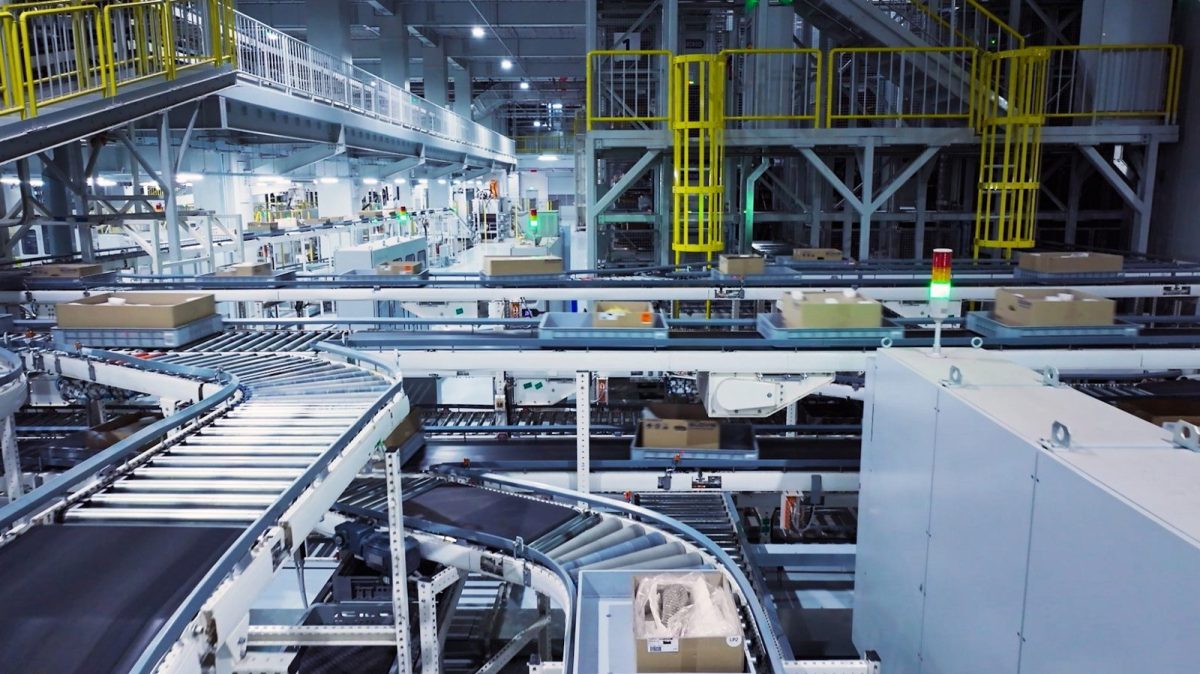
At 2:17 a.m., a conveyor belt stops. Not gradually. Not politely. It just quits.
Within minutes, production backs up. Operators start making calls. Supervisors check dashboards. Every minute of downtime burns money, and everyone knows it.
Then someone notices the problem. A sensor failed. The PLC caught it immediately, isolated the issue, and prevented a much bigger breakdown.
Crisis avoided.
It’s not the most glamorous technology in the factory. Nobody hangs posters of PLCs on office walls. Yet these industrial workhorses quietly keep modern manufacturing alive. And when they disappear? People notice fast.
That’s why industries around the world continue to rely on systems like the Allen Bradley PLC to automate processes, improve reliability, and keep production moving.
The Unsung Hero Behind Modern Manufacturing
Automation gets a lot of buzz these days. Artificial intelligence. Smart factories. Robotics. Digital twins.
But here’s the thing: none of those technologies do much without a reliable control system orchestrating the action. That’s where PLCs come in.
A Programmable Logic Controller (PLC) is essentially a rugged industrial computer designed to monitor inputs, process information, and control outputs in real time. It doesn’t care if the environment is dusty, hot, noisy, or vibrating like a washing machine during spin cycle.
It just keeps working.
An Allen Bradley PLC can monitor sensors, activate motors, regulate valves, and coordinate entire production lines, all within fractions of a second. Not flashy. Extremely effective.
Why Factories Love Predictability
Humans are amazing. We’re creative. Adaptable. Great at solving unexpected problems.
We’re also occasionally distracted by coffee, emails, and whatever happened during the morning commute.
Machines controlled by PLCs don’t have those issues.
Once programmed, they perform the same task repeatedly with near-perfect consistency. Every sequence happens exactly when it should. Every process follows the same rules.
That consistency matters.
In industries such as food processing, pharmaceuticals, automotive manufacturing, and packaging, even small variations can create quality issues, wasted materials, or regulatory headaches.
A PLC eliminates much of that uncertainty. The result? Better products, fewer mistakes, and a smoother operation overall.
Speed Matters. PLCs Move Fast.
Industrial processes don’t wait around. A production line can generate thousands of events every second. Sensors change states. Temperatures fluctuate. Motors start and stop.
A PLC processes this information almost instantly. That’s one reason manufacturers continue investing heavily in automation controllers. Decisions that might take a human several seconds, or several minutes, can be executed by a PLC in milliseconds.
Think about that. Milliseconds. When production targets are tight and downtime is expensive, those tiny moments add up quickly.
The Downtime Problem Nobody Wants to Talk About
Every facility manager has a nightmare scenario. Equipment failure.
Not because machines eventually break, we all know they do, but because failures rarely happen at convenient times.
A motor doesn’t wait until Monday morning. A sensor doesn’t fail only during business hours. Problems show up whenever they feel like it.
Modern PLC systems help reduce the chaos by providing real-time diagnostics and fault reporting. Instead of searching blindly for the source of a problem, technicians can often pinpoint issues immediately.
That’s a huge advantage. The faster a problem is identified, the faster production resumes. And in manufacturing, speed often equals profit.
Safety Isn’t Optional
Let’s be honest. Industrial equipment can be dangerous.
Massive motors. High-pressure systems. Automated machinery moving at impressive speeds. It’s not an environment where mistakes are easily forgiven.
This is another area where PLC systems shine.
Modern controllers continuously monitor operating conditions and can react faster than human operators. If a dangerous condition appears, the PLC can trigger alarms, stop machinery, or initiate emergency shutdown procedures before a situation escalates.
Safety systems powered by PLCs help facilities:
- Protect workers
- Prevent equipment damage
- Reduce operational risk
- Maintain regulatory compliance
The best safety incident is the one that never happens. PLCs play a major role in making that possible.
Growth Without Starting Over
Here’s a common business problem. A company installs an automation system for today’s production needs.
Three years later, demand doubles. Now what?
Fortunately, PLC systems are built with expansion in mind.
New sensors can be added. Additional equipment can be integrated. Entire production cells can be connected to existing infrastructure.
The system grows as the business grows.
That’s one reason the Allen Bradley PLC platform remains so popular across industries. Companies can begin with a relatively small deployment and expand into large-scale automation networks without rebuilding everything from scratch.
Future-proofing isn’t just a buzzword. It’s a practical business strategy.
Maintenance Gets Smarter
Old-school maintenance often followed a simple formula: Wait until something breaks. Then fix it. Not exactly efficient.
Today’s PLC systems support a much smarter approach. By continuously collecting performance data, controllers can help identify early warning signs before equipment failures occur.
For example:
- Rising motor temperatures
- Unusual vibration patterns
- Excessive run times
- Increased energy consumption
These subtle signals often indicate developing problems. Instead of reacting to failures, maintenance teams can address issues proactively.
Less downtime. Lower repair costs. Fewer unpleasant surprises. Everyone wins.
Data: The Factory’s New Favorite Resource
Modern manufacturers are obsessed with data. For good reason.
Data reveals bottlenecks, highlights inefficiencies, and uncovers opportunities for improvement that might otherwise remain hidden. PLCs sit at the center of this information flow.
They collect operational data continuously and provide valuable insights into:
- Production rates
- Equipment utilization
- Quality performance
- Downtime causes
- Energy consumption
The best factories today aren’t necessarily the ones with the biggest machines. They’re often the ones making the smartest decisions.
And smart decisions require accurate information.
The Bridge to Industry 4.0
You’ve probably heard the phrase “Industry 4.0” more times than you can count. Connected factories. Intelligent systems. Industrial IoT.
Some of the hype is justified. Some of it sounds like it was written by a marketing department after too much coffee. But one thing is certain: modern manufacturing is becoming increasingly connected.
PLCs act as the bridge between physical equipment and digital technologies. They gather information from the production floor and share it with cloud platforms, analytics software, and monitoring systems.
Without PLCs, many Industry 4.0 initiatives simply wouldn’t work.
They are the translators between machines and data. Not glamorous. Absolutely essential.
The Long-Term ROI Is Hard to Ignore
Every automation investment comes with a question.
Is it worth the cost?
In many cases, the answer becomes obvious surprisingly quickly. PLC systems help organizations reduce labor costs, improve quality, minimize downtime, increase output, and lower maintenance expenses.
Individually, those benefits are meaningful. Combined, they’re transformative.
That’s why companies across virtually every industrial sector continue investing in PLC technology year after year. The math simply works.
Choosing the Right Automation Partner
Even the best control systems require support. Components age. Equipment evolves. Production demands change.
Working with experienced automation specialists can help businesses maintain reliable operations while extending the life of existing systems.
Companies looking for PLC products, repair services, replacement components, and automation expertise often turn to Classic Automation, a trusted resource for industrial control solutions and legacy equipment support.
Because when production is on the line, reliability isn’t something you leave to chance.
Final Thoughts
PLCs rarely get the attention they deserve. Robots get the headlines. Artificial intelligence gets the conference presentations. Smart factories get the magazine covers.
Meanwhile, PLCs quietly keep everything running.
They improve efficiency. Enhance safety. Reduce downtime. Support growth. Generate valuable data. And they do it day after day with remarkable reliability.
That’s why industries continue depending on automation controllers, and why platforms like the Allen Bradley PLC remain foundational to modern manufacturing.
Sometimes the most important technology isn’t the newest. It’s the technology that simply works. And keeps working.